September 22, 2026 • 8 min read· Updated September 23, 2026
How to Build Secure APIs for Production
A public API can turn a useful product into an incident faster than almost any frontend bug. One missing authorization check can expose every customer's records. One unbounded endpoint can create an infrastructure bill that makes a growth spike look like a failure. And one rushed integration can give attackers a path into systems your team assumed were internal.
Knowing how to build secure APIs is not about adding a security review during the final week before launch. It is an engineering discipline that starts with product decisions, carries through implementation, and continues after release. For founders and lean product teams, the goal is not theoretical perfection. It is to ship quickly without creating avoidable risk, operational debt, or a cleanup project that stalls the roadmap.
Start with the API's real trust boundaries
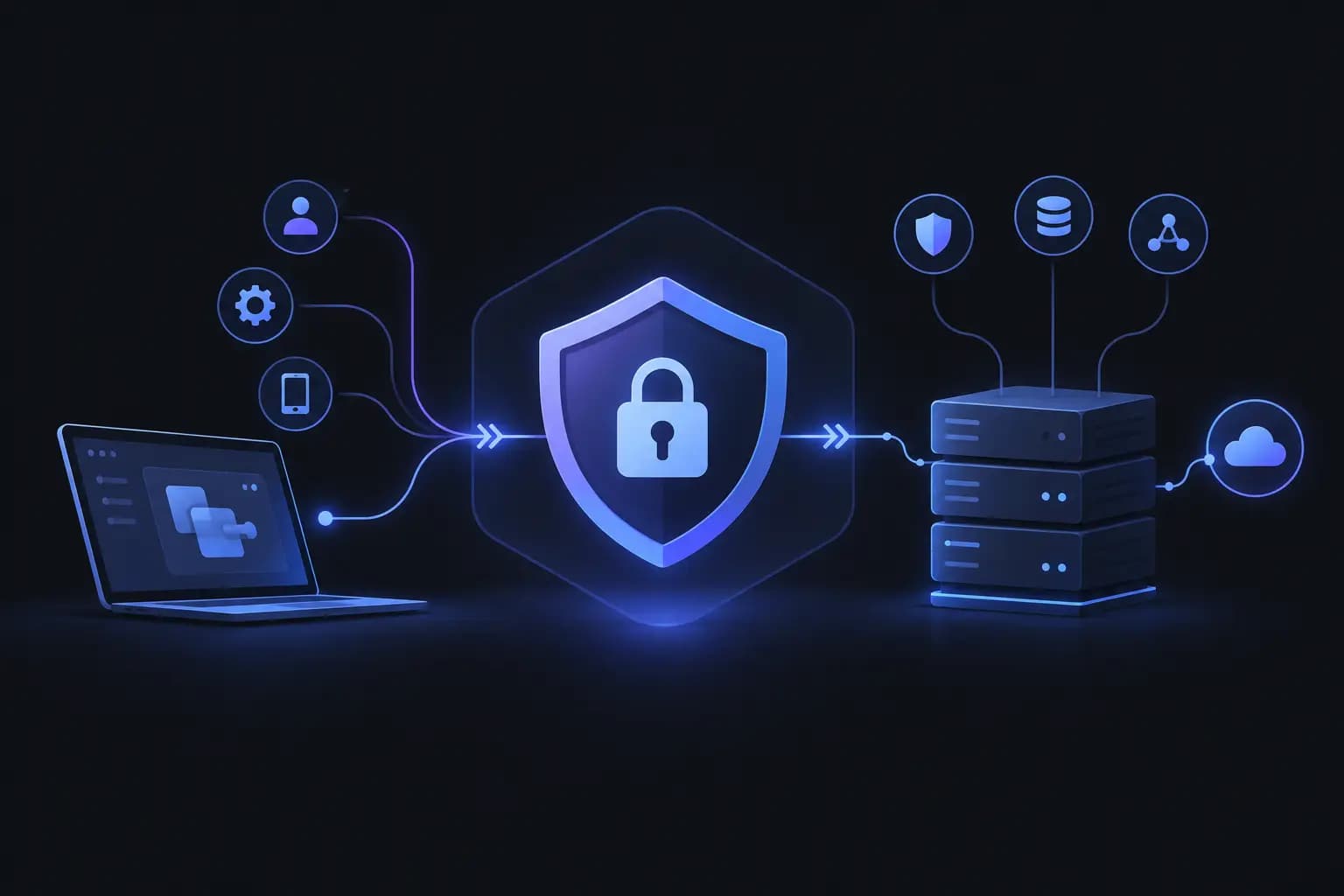
Teams often treat an API as one thing. In production, it is a set of trust boundaries: a mobile app talking to a backend, a web client using session credentials, a partner integration calling a webhook, an admin dashboard accessing sensitive actions, and possibly an AI agent invoking tools on a user's behalf.
Each boundary has a different threat model. A mobile app is not a trusted environment just because you built it. A request from your own frontend is still an internet request. An API key given to a partner can leak. A webhook payload can be forged unless you verify its signature.
Before defining endpoints, document what each caller can do, what data it can access, and what happens if its credentials are compromised. This does not need to become a 40-page compliance exercise. A short architecture decision record is enough when it answers practical questions: Which endpoints are public? Which require a user session? Which require a service identity? Which actions are irreversible or financially sensitive?
That work prevents a common startup mistake: building convenient endpoints first, then trying to bolt on controls after customers are already depending on the behavior.
Authentication proves identity. Authorization controls access.
These are separate problems, and mixing them is a reliable way to leak data. Authentication answers, "Who is making this request?" Authorization answers, "Is this identity allowed to perform this action on this specific resource?"
Use established identity patterns rather than custom token schemes. For customer-facing products, that usually means short-lived access tokens or secure server-managed sessions. For machine-to-machine integrations, use scoped API keys or client credentials with rotation and expiration policies. Store secrets in a managed secret store, not in source control, mobile binaries, client-side environment variables, or shared documents.
The authorization check must happen at the resource level. If a user requests `/projects/123`, do not only verify that they are signed in. Verify that they belong to the organization that owns project 123 and have permission to view it. The same rule applies to updates, exports, uploads, billing actions, and administrative operations.
This is where insecure direct object references appear. An attacker changes an ID in a request and receives another customer's data because the backend checked identity but never checked ownership. UUIDs can make guessing IDs harder, but they are not authorization. Treat every resource identifier as attacker-controlled input.
For multi-tenant SaaS products, make tenant context explicit in your data model and queries. Ideally, the system derives organization scope from the authenticated identity rather than trusting an organization ID submitted by the client. Defense in depth matters here: enforce tenant restrictions in application logic and, where appropriate, at the database layer.
Validate every request at the edge
A typed frontend does not make your API typed. Clients can send malformed JSON, unexpected fields, oversized files, negative quantities, invalid state changes, and values designed to trigger expensive work. Your API must assume requests are hostile until validated.
Use schema validation for request bodies, query parameters, path parameters, and headers. Define allowed fields rather than accepting arbitrary objects. Apply sensible size limits before parsing large payloads. Validate business rules after basic shape validation: a date may be correctly formatted but still fall outside an allowed booking window; a user may have permission to edit a record but not to move it from "paid" back to "draft."
Parameterize database queries and use an ORM or query builder correctly to avoid injection. Do not pass user-controlled strings into dynamic queries, shell commands, file paths, template engines, or URLs without context-appropriate validation and encoding.
Response handling deserves the same discipline. Return only fields the caller needs. Internal flags, password reset tokens, provider identifiers, audit notes, and stack traces should never appear in normal API responses. Consistent error messages help clients recover, but detailed internal failures belong in protected logs, not in the response body.
Build abuse controls before traffic forces the issue
Most API attacks are not sophisticated. They are repeated login attempts, automated scraping, aggressive polling, enumeration of identifiers, and oversized requests intended to consume compute or storage. A small set of controls handles a large portion of this risk.
- Apply rate limits by endpoint and identity, not only by IP address.
- Set request body, upload, pagination, and query-complexity limits.
- Use idempotency keys for payment, provisioning, and other actions that must not run twice.
- Add timeouts, concurrency limits, and circuit breakers around slow dependencies.
- Require stronger checks for login, password reset, exports, and sensitive account changes.
Rate limiting involves trade-offs. A global limit can protect infrastructure but punish legitimate users during a launch. Per-user limits are fairer but do less against anonymous traffic. The practical answer is layered limits: a broad edge limit, tighter controls on expensive routes, and identity-based limits after authentication.
Idempotency is especially valuable for startup products handling payments or retries from mobile networks. If a user taps "subscribe" twice because the app appears stuck, the backend should safely return the original outcome rather than create duplicate charges or duplicate records.
Protect data in transit, at rest, and in logs
TLS is table stakes for every environment that handles real data. Redirect HTTP to HTTPS, use secure cookie attributes where cookies are involved, and avoid sending credentials in URLs. For internal service communication, do not assume a private network makes encryption or authentication optional. Internal credentials get exposed too.
At rest, encrypt sensitive data using your platform's managed capabilities and minimize what you store in the first place. The safest customer record is often the field you chose not to collect. Tokenize or delegate high-risk payment and identity data to specialized providers when that fits the product.
Logging is where otherwise careful teams accidentally create a second data breach. Log request IDs, actor IDs, endpoint names, status codes, latency, and meaningful security events. Redact authorization headers, session values, passwords, API keys, reset tokens, and sensitive personal data. Test redaction rather than assuming a logger configuration works under every error path.
Make security observable and releasable
A secure API is not static. Dependencies gain vulnerabilities, permissions drift, new endpoints bypass conventions, and product changes alter the risk profile. Production readiness requires feedback loops.
Create audit events for actions that matter: changes to roles, login failures, credential creation, access denials, exports, payment state transitions, and administrative changes. Alert on patterns, not every individual event. Hundreds of denied requests from one account may be a bug, an integration failure, or an attack. You need enough context to tell the difference quickly.
Add automated checks to the delivery pipeline. Run dependency scanning, static analysis, tests for authorization behavior, and secret detection before deployment. For high-risk endpoints, write explicit negative tests: a user from Organization A must not read, modify, or delete Organization B's resources. These tests catch the failures happy-path coverage misses.
Release changes in a way that allows recovery. Use feature flags for risky capabilities, maintain backward-compatible API versions when clients cannot update immediately, and keep a tested rollback path. Database migrations should be designed so the previous application version can still run if deployment needs to reverse.
Security work should match the product stage
A pre-seed MVP does not need the same control surface as a platform serving enterprise customers across multiple regions. But "we are early" is not a reason to skip authorization, validation, secret management, backups, and basic observability. Those are foundational controls, not enterprise extras.
What changes with stage is depth. Early on, keep the architecture simple and make safe behavior the default. As usage grows, add finer-grained roles, stronger audit trails, formal incident response, penetration testing, and compliance controls that match the customers you are selling to.
The fastest teams do not treat security as a separate phase that slows delivery. They establish a few non-negotiable engineering patterns, automate them, and make every new endpoint follow the same path. That is how you keep shipping production-ready features without turning growth into a security gamble.

About the author
Usama Moin
Technical Consultant & Product Builder
Usama Moin has 11+ years of experience building revenue-focused web, mobile, and AI products for startups and scale-ups. He works hands-on across product strategy, full-stack engineering, React Native, and production AI systems.